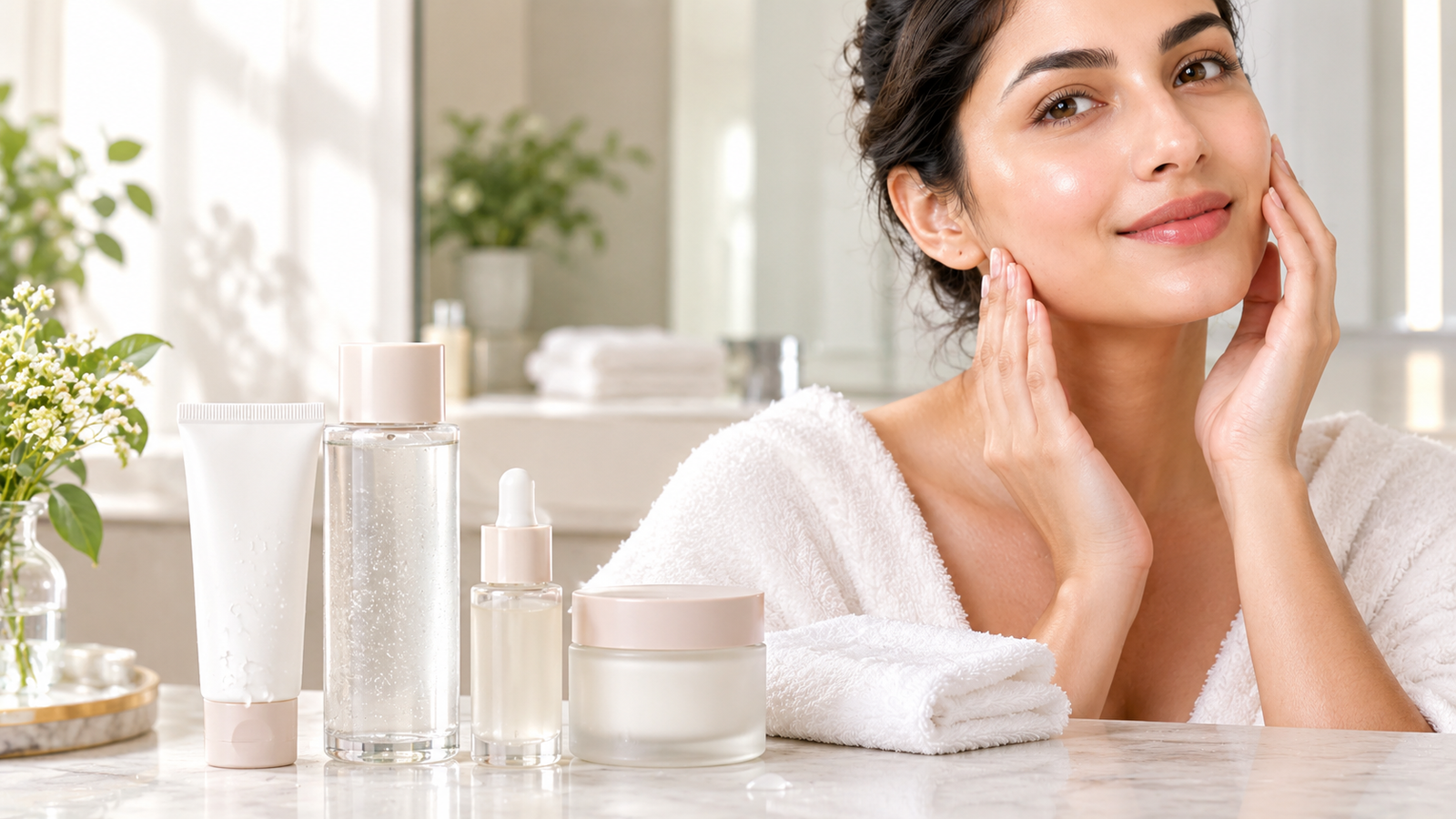
The idea of Korean glass skin has become popular because it gives a simple visual impression: skin that looks fresh, smooth, hydrated, and naturally luminous. But achieving that appearance is not about making your face as shiny as possible or using ten different products every day. A good korean skincare routine is really about gentle care, hydration, consistency, and choosing products that suit your skin.
The popular K-beauty approach also encourages people to pay attention to how products are layered. Instead of rushing through a complicated routine, you can build a few useful steps around cleansing, hydration, treatment, moisturizing, and sun protection. This makes a skincare routine for beginners much easier to follow.
In this guide, we will break down a practical korean glass skin routine, explain what each step is supposed to do, and show how you can adjust it for oily, dry, sensitive, or acne-prone skin.
This guide focuses on practical, skin-friendly habits rather than promising a perfect “glass skin” appearance. Skincare recommendations can vary by skin type, sensitivity, and existing concerns, so new products should be introduced gradually and adjusted according to how your skin responds.
What Is Korean Glass Skin?
“Glass skin” is a beauty term used to describe skin that appears exceptionally smooth, hydrated, even, and luminous. It is not a medical skin condition or a promise that your skin should literally look like glass.
Healthy skin naturally has texture, pores, fine lines, and occasional imperfections. The “glass skin” look is mainly a visual description, not a separate skin type. Factors such as adequate hydration, a healthy skin barrier, smoother surface texture, and protection from UV exposure can influence how luminous skin appears. Genetics, age, climate, skincare habits, and underlying skin conditions also affect the final appearance, so the same routine will not produce identical results for everyone. The goal of a sensible K-beauty approach is therefore not perfection. It is to support comfortable, well-moisturized skin and a healthy-looking complexion.
Hydration is particularly important because water content and the skin barrier influence how smooth and comfortable skin looks and feels. A recent review of cosmetic moisturization also explains the roles of humectants, emollients, and occlusives in supporting skin hydration.
Read the PubMed review on skin hydration.
Do You Really Need 10 Korean Skincare Steps?
Not necessarily. The famous 10-step Korean skincare routine is better understood as a flexible framework than a rule that everyone must follow.
Who Actually Needs More Steps?
A longer routine can make sense when you have a specific reason for each additional product. For example, someone dealing with dryness may prefer an extra hydrating layer, while someone concerned about uneven tone may choose one targeted treatment. If your basic cleanser, moisturizer, and sunscreen routine already keeps your skin comfortable, adding more products is not automatically an improvement.
Your skin does not automatically become healthier because you use more products. In fact, adding too many treatments at once can cause irritation and make it difficult to identify which product is helping or causing a problem. The American Academy of Dermatology also emphasizes that consistency matters more than simply following a long routine.
A practical routine can be much shorter: cleanse, hydrate or treat when needed, moisturize, and protect your skin from the sun in the morning. Optional steps can then be added according to your skin's needs.
Step-by-Step Korean Skincare Routine
1. Start With a Gentle Cleanser
Cleansing is the first foundation of your routine. Use a gentle face wash to remove sweat, excess oil, sunscreen, makeup, and everyday buildup without leaving your skin feeling stripped.
If your face feels tight or uncomfortable immediately after washing, your cleanser may be too harsh or you may be cleansing more often than necessary. Avoid aggressive scrubbing and use lukewarm water instead of very hot water.
If you are unsure which type of cleanser suits you, our guide on choosing a cleanser for your skin type can help you compare options.
2. Add a Hydrating Toner or Essence
Toner is an optional step, but it can be useful if you enjoy lightweight hydration. Modern toners are not necessarily about removing leftover dirt. Many are designed to add moisture or prepare the skin for the products that follow.
An essence is another popular part of a korean beauty routine. It usually has a lightweight texture and focuses on hydration or skin conditioning. You do not need both a toner and essence simply because they appear in traditional K-beauty routines. Pick one if it serves a purpose for your skin.
3. Apply a Targeted Serum
This is where you can personalize your routine. A serum can address a particular concern such as dehydration, dullness, uneven tone, or signs of aging.
For a simple dewy skin routine, hydrating ingredients such as hyaluronic acid or glycerin may be useful. If uneven tone is your main concern, you might consider a suitable antioxidant or brightening ingredient. For acne-prone skin, choose treatments carefully and avoid stacking several strong actives without a reason.
If you are adding a serum, start with one product and give your skin time to adjust before introducing another. You can have healthy skin without using a serum at all; it is simply an optional step when you want to target a particular concern.
4. Use a Sheet Mask Occasionally
Sheet masks are one of the most recognizable K-beauty skincare products, but they should be viewed as an optional hydration-focused treatment rather than a daily necessity.
When your skin feels dry or you simply want a relaxing skincare step, a hydrating mask can make your skin feel temporarily softer and more comfortable. Follow the product's instructions rather than leaving the mask on for much longer than recommended.
If a mask causes burning, itching, or persistent redness, remove it and stop using it.
5. Moisturize to Support the Skin Barrier
Moisturizer is one of the most useful steps in almost any skincare routine. It helps reduce moisture loss and supports the skin barrier, which is important for keeping skin comfortable and resilient.
For oily skin, a lightweight gel or lotion may feel more comfortable. Sensitive skin generally benefits from keeping the formula simple and avoiding unnecessary fragrance or irritating ingredients.
Do not skip moisturizer simply because your face becomes oily. Oily and dehydrated skin can occur together, and the right lightweight formula can still be useful.
For more practical hydration advice, see our guide on why skin can still feel dry after using moisturizer.
6. Finish Your Morning Routine With Sunscreen
If there is one step you should not treat as optional during the daytime, it is sun protection. UV exposure contributes to sunburn, premature skin aging, and other skin damage.
The American Academy of Dermatology recommends choosing a broad-spectrum sunscreen with SPF 30 or higher. Water resistance can also be useful when you are swimming or sweating.
See the American Academy of Dermatology sunscreen guide.
Think of sunscreen as the final protective layer of your korean skincare morning routine. Without consistent sun protection, efforts aimed at maintaining an even, healthy-looking complexion can be undermined by continued UV exposure.
Korean Skincare Morning Routine
A simple morning routine does not need to take half an hour. A practical order can be:
- Gentle cleanser, if needed
- Hydrating toner or essence
- Serum, if appropriate
- Moisturizer
- Broad-spectrum SPF 30+ sunscreen
Your nighttime routine can do more of the cleansing work, while the morning focuses on hydration and protection.
Korean Skincare Night Routine
Your nighttime skincare routine can be slightly more treatment-focused because sunscreen is no longer required.
- Remove makeup and sunscreen
- Cleanse gently
- Apply toner or essence if desired
- Use one suitable treatment or serum
- Moisturize
Build Your Routine Around Your Skin’s Needs
For Oily Skin
Choose lightweight, non-comedogenic textures and avoid repeatedly washing your face simply because it becomes shiny. Hydration still matters. A light moisturizer and suitable sunscreen can help you maintain comfort without making the routine feel heavy.
For Dry Skin
Focus on hydration and barrier support. Avoid harsh cleansers, excessive exfoliation, and very hot water.
For Sensitive Skin
If your skin is easily irritated, a shorter routine is often the better place to start. Choose gentle products and add them gradually rather than changing several things at once. Products with fewer potential irritants, including fragrance-free options, may be easier to tolerate. Pay attention to your skin after each new addition, and stop using a product if it consistently causes burning, discomfort, or noticeable redness.
For general guidance on caring for sensitive or easily irritated skin, see the American Academy of Dermatology's skin care guidance.
For Acne-Prone Skin
When breakouts are a concern, keeping your skincare routine focused can be more helpful than adding product after product. A mild cleanser, lightweight moisturizer, daily sunscreen, and a suitable acne treatment can form a practical starting point. Give your skin time to respond before introducing several new treatments at once. Avoid picking at breakouts and be cautious when combining exfoliating acids or other active ingredients.
If you have persistent, painful, deep, or worsening acne, a dermatologist can help determine the most appropriate treatment rather than relying on a long list of cosmetic products.
For additional information about acne care and treatment options, see the American Academy of Dermatology's acne treatment guide.
Korean Beauty Secrets That Actually Make Sense
K-beauty does not have to mean using a long list of products. One of its more practical ideas is to take care of your skin consistently instead of trying to fix every small imperfection. Gentle cleansing, moisturizer, hydration, and daily sunscreen can often be more useful than adding several strong treatments at once.
What works for someone else may not work for you, so notice how your skin reacts instead of copying another person's routine step for step. A lightweight product may feel comfortable on oily skin but not provide enough moisture for dry skin, while a heavily fragranced formula may be uncomfortable for someone with sensitive skin.
It is also worth remembering that healthy-looking skin is influenced by more than cosmetics. Sleep, nutrition, stress, climate, hormones, and general health can all affect how your skin looks and feels.
How Long Does It Take to See Results?
There is no universal timeline for achieving a glass-skin appearance. Hydration can make skin feel softer fairly quickly, while concerns such as acne, pigmentation, or uneven texture usually require more patience.
Instead of following a “7 days glowing skin challenge,” give your routine enough time to show whether it is comfortable and sustainable. Changing products every few days can create more confusion than progress.
Remember that the goal is not to copy someone else's complexion. The better goal is to build a routine that leaves your own skin healthy, comfortable, hydrated, and protected.
Common Mistakes to Avoid
- Using every trending Korean skincare product at once.
- Exfoliating too frequently in the hope of getting smoother skin faster.
- Skipping moisturizer because your skin is oily.
- Using very hot water or aggressively scrubbing the face.
- Ignoring sunscreen while focusing on serums and masks.
- Changing your entire routine whenever you see a new social media trend.
- Expecting perfectly poreless “glass skin” in a few days.
Frequently Asked Questions
What is the 10-step Korean skincare routine?
The traditional 10-step approach usually combines cleansing, toner, essence, treatment products, masks, moisturizer, and sunscreen.
How do Koreans get glowing skin?
There is no single Korean beauty secret. Consistent skincare, hydration, sun protection, appropriate products, and lifestyle habits can all contribute to healthy-looking skin.
What is glass skin?
Glass skin is a beauty term describing a complexion that appears smooth, hydrated, even, and luminous. It is not a medical skin type or a guarantee that pores and texture will disappear.
Is a Korean-Inspired Skincare Routine Easy to Do at Home?
Yes. Most of the routine involves simple at-home skincare steps such as cleansing, hydration, moisturizing, and sunscreen.
Is Korean skincare suitable for sensitive skin?
Some Korean skincare products can work well for sensitive skin, but the country of origin does not determine whether a product will suit you. Look for simple formulas, introduce products gradually, and stop using anything that causes persistent irritation.
How long does it take to get glass skin?
There is no fixed timeline. Hydration may improve the feel and appearance of skin relatively quickly, while acne, pigmentation, and texture concerns generally require longer-term care.
Final Thoughts
A good korean skincare routine does not have to be complicated, expensive, or filled with ten products. The most useful parts of the K-beauty approach are its focus on gentle layering, hydration, consistency, and thoughtful product selection.
Start with the basics: cleanse gently, hydrate when useful, use a suitable treatment if you need one, moisturize, and protect your skin from the sun every morning. Once those habits are comfortable, you can experiment with optional steps such as essences or sheet masks.
It may take time to see the kind of glow people associate with “glass skin,” and that is completely normal. A simple routine that keeps your skin comfortable, hydrated, and protected is more useful in the long run than chasing quick results with too many products.